
Glossopharyngeal Neuralgia: Questions & Answers
What is Glossopharyngeal Neuralgia?
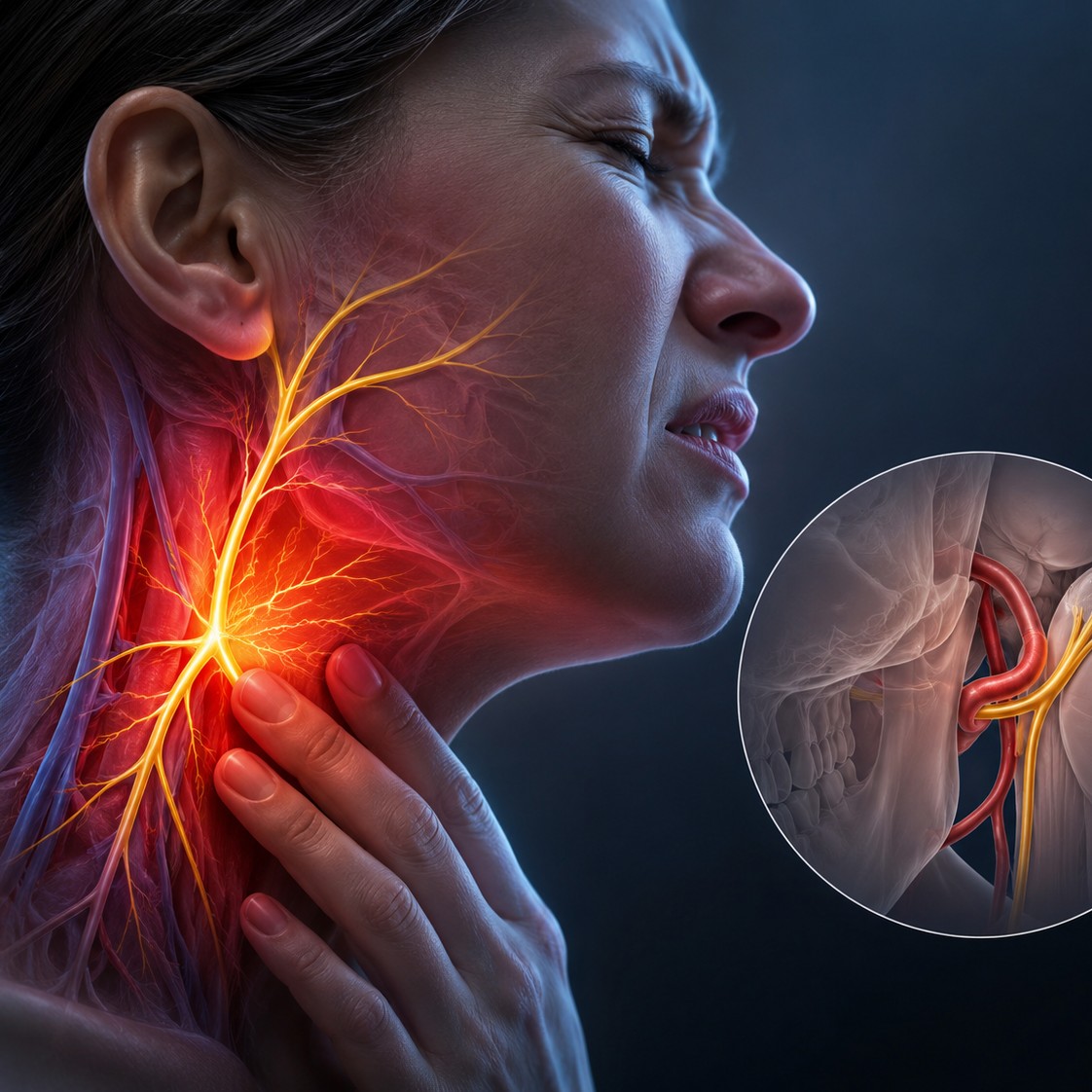
Glossopharyngeal neuralgia is a rare neurological condition causing sudden, severe, electric-shock-like or stabbing pain along the glossopharyngeal nerve (cranial nerve IX). Pain commonly affects the back of the throat, tonsil, base of the tongue, ear, angle of the jaw and upper neck.
What are the symptoms of Glossopharyngeal Neuralgia?
Patients may experience:
* Severe, sharp or electric-shock-like throat pain
* Pain at the base of the tongue or tonsillar region
* Deep pain in the ear
* Pain near the angle of the jaw or upper neck
* Repeated short attacks of intense pain
* Pain triggered by swallowing, chewing, speaking, coughing or yawning
Rarely, severe attacks can cause dizziness, fainting or changes in heart rate.
What triggers Glossopharyngeal Neuralgia?
Common triggers include swallowing, chewing, talking, coughing, sneezing, yawning and touching the throat or tonsillar area. Some patients experience pain spontaneously without an obvious trigger.
What causes Glossopharyngeal Neuralgia?
The most common cause is believed to be compression or irritation of the glossopharyngeal nerve by a nearby blood vessel. Other causes include skull-base tumours, multiple sclerosis, inflammation, trauma or other structural abnormalities.
How is Glossopharyngeal Neuralgia diagnosed?
Diagnosis is based on the characteristic location, nature and triggers of pain, together with a neurological examination. An MRI brain with cranial nerve and skull-base imaging may be recommended to identify neurovascular compression or other structural causes.
Can throat or ear pain be Glossopharyngeal Neuralgia?
Yes. Glossopharyngeal neuralgia can cause severe pain in the throat, tonsil, base of tongue and ear. Because these symptoms can resemble ENT, dental or throat disorders, specialist neurological evaluation may be required when routine treatment does not explain or control the pain.
What is the treatment for Glossopharyngeal Neuralgia?
Treatment depends on the cause and severity. Antineuralgic medicines such as carbamazepine, oxcarbazepine, gabapentin or pregabalin may provide relief under medical supervision.
In selected patients, a glossopharyngeal nerve block may be used for diagnosis and pain relief.
When is surgery required for Glossopharyngeal Neuralgia?
If severe pain persists despite appropriate medication and imaging demonstrates vascular compression of the glossopharyngeal nerve, microvascular decompression (MVD) may be considered. The goal is to separate the blood vessel from the nerve and relieve the abnormal compression.
Is Glossopharyngeal Neuralgia curable?
Many patients can achieve significant or long-lasting pain relief with appropriate treatment. The best treatment depends on identifying the underlying cause and selecting the appropriate medical, interventional or surgical approach.
Who is a Glossopharyngeal Neuralgia Specialist in South Mumbai?
Dr. Bhushan Meshram is a Consultant Neurosurgeon and neuralgia pain specialist in South Mumbai, providing evaluation and treatment for complex neuralgic pain conditions, including glossopharyngeal neuralgia.
Patients searching for a glossopharyngeal neuralgia specialist, neuralgia pain specialist, facial pain specialist or neurosurgeon in South Mumbai can seek specialist consultation.
Consultation is accessible for patients from Lalbaug, Mumbai Central, Byculla, Chinchpokli, Curry Road, Peddar Road, Worli, Dadar, Parel, Lower Parel, Mahalaxmi, Madanpura and Agripada.
What is Glossopharyngeal Neuralgia?
Glossopharyngeal neuralgia is a rare neurological condition causing sudden, severe, electric-shock-like or stabbing pain along the glossopharyngeal nerve (cranial nerve IX). Pain commonly affects the back of the throat, tonsil, base of the tongue, ear, angle of the jaw and upper neck.
What are the symptoms of Glossopharyngeal Neuralgia?
Patients may experience:
* Severe, sharp or electric-shock-like throat pain
* Pain at the base of the tongue or tonsillar region
* Deep pain in the ear
* Pain near the angle of the jaw or upper neck
* Repeated short attacks of intense pain
* Pain triggered by swallowing, chewing, speaking, coughing or yawning
Rarely, severe attacks can cause dizziness, fainting or changes in heart rate.
What triggers Glossopharyngeal Neuralgia?
Common triggers include swallowing, chewing, talking, coughing, sneezing, yawning and touching the throat or tonsillar area. Some patients experience pain spontaneously without an obvious trigger.
What causes Glossopharyngeal Neuralgia?
The most common cause is believed to be compression or irritation of the glossopharyngeal nerve by a nearby blood vessel. Other causes include skull-base tumours, multiple sclerosis, inflammation, trauma or other structural abnormalities.
How is Glossopharyngeal Neuralgia diagnosed?
Diagnosis is based on the characteristic location, nature and triggers of pain, together with a neurological examination. An MRI brain with cranial nerve and skull-base imaging may be recommended to identify neurovascular compression or other structural causes.
Can throat or ear pain be Glossopharyngeal Neuralgia?
Yes. Glossopharyngeal neuralgia can cause severe pain in the throat, tonsil, base of tongue and ear. Because these symptoms can resemble ENT, dental or throat disorders, specialist neurological evaluation may be required when routine treatment does not explain or control the pain.
What is the treatment for Glossopharyngeal Neuralgia?
Treatment depends on the cause and severity. Antineuralgic medicines such as carbamazepine, oxcarbazepine, gabapentin or pregabalin may provide relief under medical supervision.
In selected patients, a glossopharyngeal nerve block may be used for diagnosis and pain relief.
When is surgery required for Glossopharyngeal Neuralgia?
If severe pain persists despite appropriate medication and imaging demonstrates vascular compression of the glossopharyngeal nerve, microvascular decompression (MVD) may be considered. The goal is to separate the blood vessel from the nerve and relieve the abnormal compression.
Is Glossopharyngeal Neuralgia curable?
Many patients can achieve significant or long-lasting pain relief with appropriate treatment. The best treatment depends on identifying the underlying cause and selecting the appropriate medical, interventional or surgical approach.
Who is a Glossopharyngeal Neuralgia Specialist in South Mumbai?
Dr. Bhushan Meshram is a Consultant Neurosurgeon and neuralgia pain specialist in South Mumbai, providing evaluation and treatment for complex neuralgic pain conditions, including glossopharyngeal neuralgia.
Patients searching for a glossopharyngeal neuralgia specialist, neuralgia pain specialist, facial pain specialist or neurosurgeon in South Mumbai can seek specialist consultation.
Consultation is accessible for patients from Lalbaug, Mumbai Central, Byculla, Chinchpokli, Curry Road, Peddar Road, Worli, Dadar, Parel, Lower Parel, Mahalaxmi, Madanpura and Agripada.


